Breaking the silence!
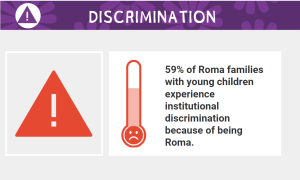
“Just because they are Roma, 6 out of 10 Roma families with young children face discrimination!”
While being the largest ethnic minority in Europe, with an estimated population of 12 million, the Roma face systemic discrimination and exclusion that persistently impact their daily lives. This reality particularly affects young children, limiting their opportunities for development, learning, and growth.
Insights from the European REYN Early Childhood Research Study (REYN Study) commissioned by the International Step by Step Association (ISSA), uncover a strong and recurrent pattern of discrimination experienced by Roma families with young children. This discrimination permeates various aspects of their lives, from access to public services, early learning and education to housing and healthcare.
A Snapshot of REYN Study findings on discrimination
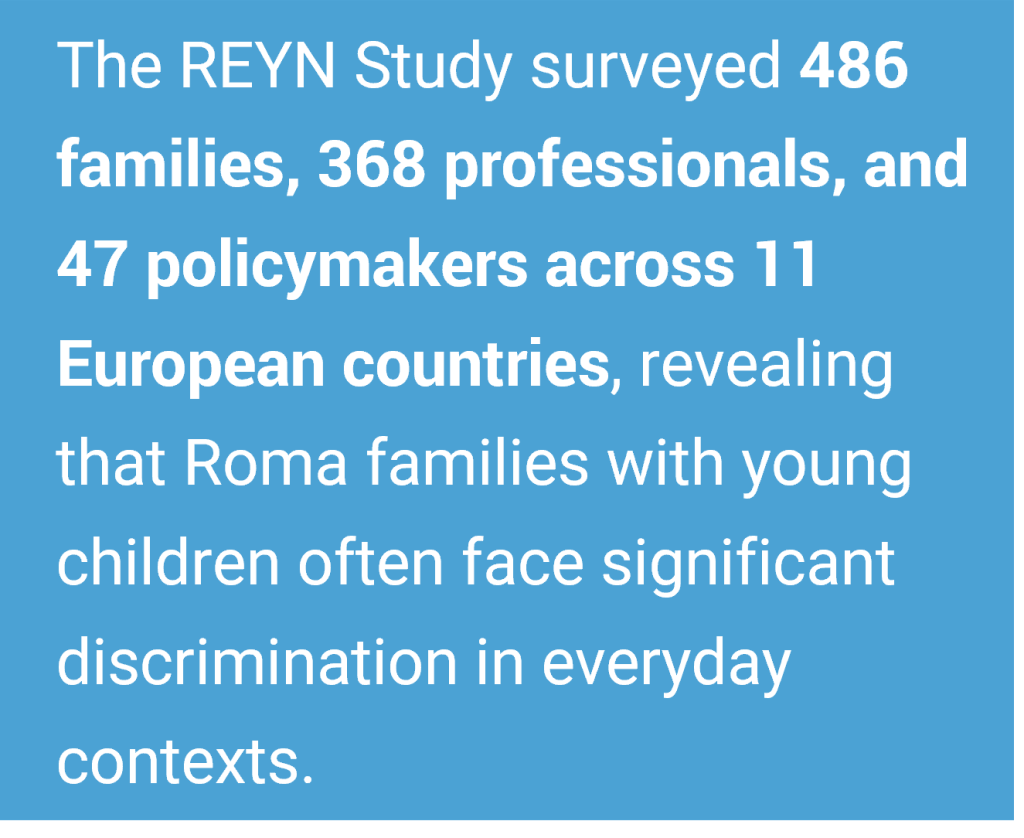
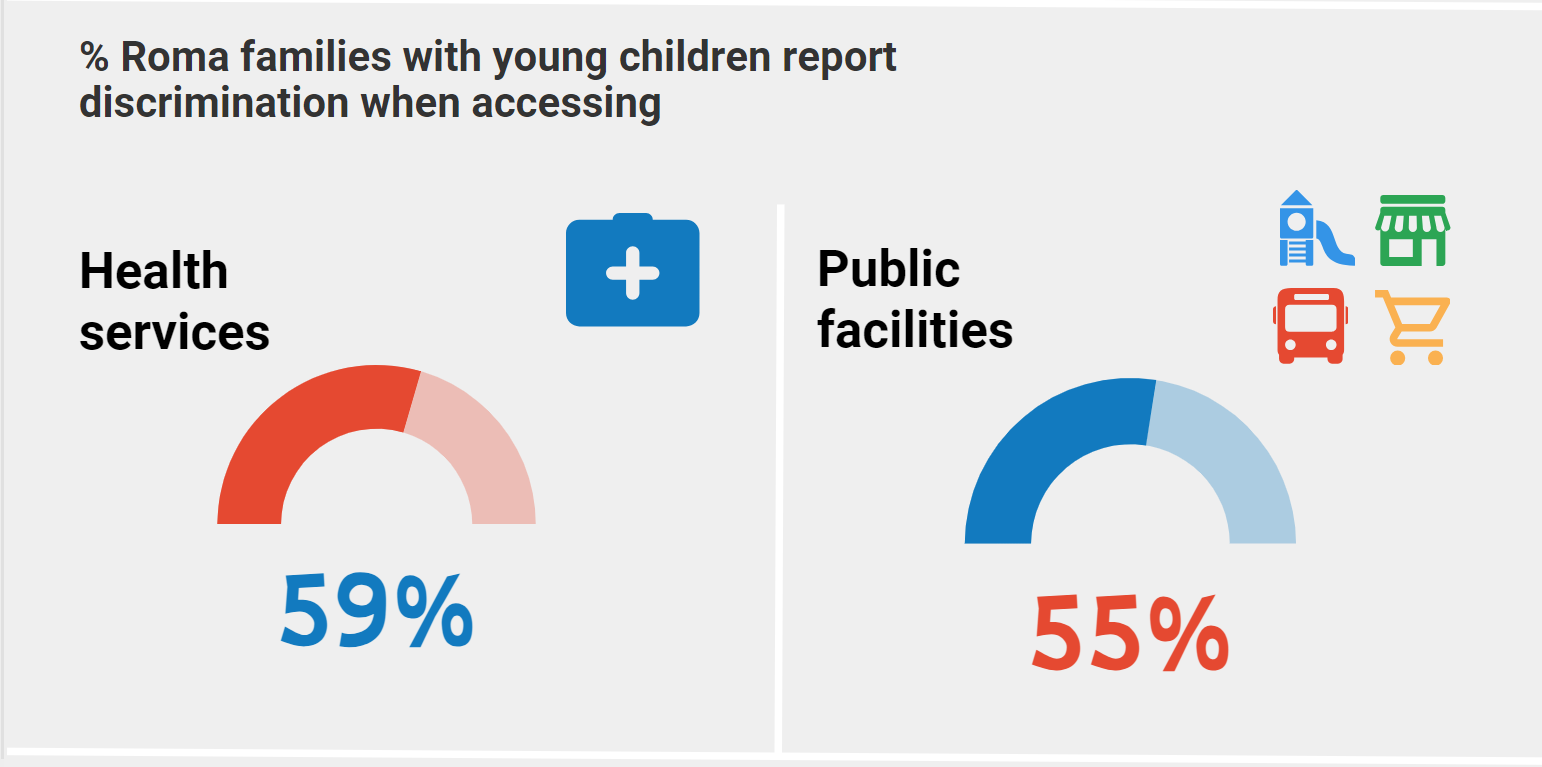
The REYN Study surveyed 486 families, 368 professionals, and 47 policymakers across 11 European countries, revealing that Roma families with young children often face significant discrimination in everyday contexts. On average, 55% of these families reported experiencing discrimination when accessing public services such as supermarkets, shops, and public transportation. This discrimination creates barriers to essential resources and contributes to the social isolation of Roma families.
In countries like Kosovo, families express fear of prejudice and stereotypes in schools and kindergartens, which hinders them from sending their children to these institutions. In Slovakia, professionals note that Roma families often face financial challenges and exclusion, highlighting economic discrimination. In Hungary, there’s a clear need for strategic planning and research on outcomes related to Roma children, indicating neglect at an institutional level.
“Policy makers also cite systemic issues within the countries as reasons for the lack of policy execution regarding the Roma population.” In Hungary, they criticize the lack of strategic planning, while in Kosovo, they acknowledge that rights are often recognized on paper but rarely implemented. Ukrainian policymakers echo these sentiments, pointing out the disconnect between declared policies and their actual implementation, leaving Roma interests neglected in political decision-making. Policymakers in Slovakia call for more intensive work with Roma children and their parents, stressing the importance of active involvement for progress.
The impact of discrimination on Early Childhood Development
The first thousand days of a child’s life are crucial for their optimal development and the realization of their full and unique potential. Adverse conditions, such as discrimination and exclusion, can have long-term consequences on children’s physical and mental development, resulting in social inequalities that affect the rest of their lives. Research from the Center on the Developing Child from Harvard University demonstrates that chronic stress and exclusion, common experiences among Roma children, can disrupt brain development, impair learning and memory, and increase susceptibility to chronic diseases.
Young Roma children in Europe: Areas of discrimination
- Public Services: Nearly six out of ten Roma families report experiencing discrimination in accessing public services. This not only hinders their access to essential resources such as libraries or playgrounds, but also erodes trust in these services, further isolating Roma communities. Healthcare: More than half of Roma families encounter discrimination in healthcare settings, which discourages them from seeking necessary medical care. This neglect can lead to health disparities that impact a children’s physical and cognitive development.
- Early learning opportunities: Discrimination in educational settings is particularly concerning. A significant proportion of Roma children face biases that affect their educational journey from an early age, creating barriers to their learning potential and setting a precedent for future educational hurdles.
The urgency for inclusive policies
“What surrounds us shapes us1 — the environments that influence early childhood shape lifelong outcomes. For Roma children, who face systemic exclusions and bias, these environments are often far from supportive. The REYN Study’s comprehensive insights into the discrimination faced by Roma families underscore the urgent need for targeted and inclusive policies that address these deep-rooted issues, aiming to provide a fair start for all children. It is a call to action for policymakers, educators, and society at large to break the cycle of discrimination and ensure that every child, regardless of their background, has an equal chance to thrive.
These findings from the REYN Study are a powerful reminder that the fight against discrimination is not over. The journey toward equity and inclusion for young Roma children is a collective responsibility that demands attention, empathy, and decisive action.
1 Harvard Center on Developing Child – Places matter- https://developingchild.harvard.edu/resources/place-matters-what-surrounds-us-shapes-us/