

8 Countries involved

The Roma Early Childhood Inclusion (RECI) series has been a joint initiative of the Open Society Foundations/ Early Childhood Program (OSF/ECP), the Roma Education Fund (REF) and UNICEF.
“Roma children are valuable. Europe and its member states cannot afford to neglect their future.” John Bennett, RECI overview report The Roma Early Childhood Inclusion (RECI) series has been a joint initiative of the Open Society Foundations/Early Childhood Program (OSF/ECP), the Roma Education Fund (REF) and UNICEF.
The partnership was created to respond to the need for consolidated evidence to advocate and advance the rights of young Roma children and their families. All three organisations are dedicated to enabling young Roma children to access and benefit from high quality, inclusive and effective early childhood development services.
Systematic barriers often prevent Romani children from accessing the foundational support they need. REYN (Romani Early Years Network) bridges this gap by empowering the workforce, influencing policy, and putting the rights of the child at the center of the European agenda.
Bulgaria
Learn moreRoma Early Childhood Inclusion + Bulgaria Report (2020)
The initiative has engaged 8 countries and 21 partner organisations, supported by a diverse team of 37 authors and over 68 researchers and contributors.
8 Countries involved

21 Partner organisations in the RECI process across all countries

2 RECI Report technical editorship
and design

37 Authors

12 RECI reports and policy briefs

68 Researchers, editors and other contributors.

3 International organisations

21 International advisors and consultants

8 National consultation events

35+ Focus groups with Roma NGOs and parents and children
Explore key tools, research, and policy resources supporting inclusive early childhood development for Roma and Traveller children across Europe, and advancing equity in early years education.
This interactive tool supports Roma paraprofessionals and other educational assistants in evaluating their competencies across the domains outlined in the guidelines. It enables them to: Reflect on their strengths and…
Learn moreIn general, the situation of Roma children, pupils and students remains challenging across Europe. This report aims to examine the current situation of the enforcement of non-discrimination law in Europe with regard…
Learn moreRoma children belong to a social group exposed to multiple axes of discrimination. Roma paraprofessionals, together with other trained professionals and educational leaders, are crucial for achieving the success of…
Learn moreThe right to education of minorities: overview of States’ measures reported in the 10th Consultation on the 1960 Convention and Recommendation against Discrimination in Education Diversity in education should be seen as…
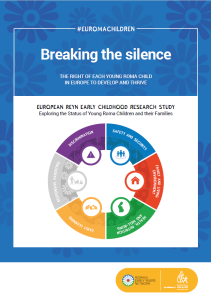
Learn moreThe European REYN Early Childhood Research Study (the REYN Study) provides an examination of the status of young Roma children and their families across Europe. It offers a comprehensive understanding of the…
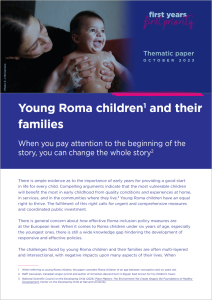
Learn moreYoung Roma children have an equal right to thrive. The fulfilment of this right calls for urgent and comprehensive measures and coordinated public investment. However, there is general concern about how effective Roma…
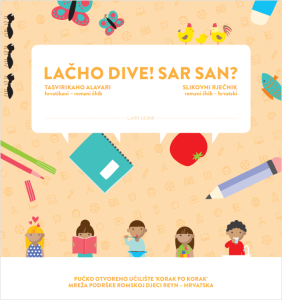
Learn moreRecognizing the importance of the child’s first language in learning processes and settings, and especially for children from vulnerable groups like the Roma, REYN Croatia has created this visual dictionary to support…
Learn moreAn increasing number of children are growing up in environments in which more than one language is spoken. For many of these children, early childhood education and care (ECEC) is often their first contact with the…
Learn more