What, Who, Why: Strengthening Roma Paraprofessionals with New INVAC Tools for Equity in Education
Roma children continue to face persistent barriers in accessing equitable, high-quality early childhood education and care (ECEC). Roma paraprofessionals—who often work as assistants, mediators, or community liaisons—play an essential role in building trust between families and institutions, supporting children’s development, and ensuring culturally responsive practices in education. However, they frequently lack access to structured training, clear professional pathways, and systemic support.
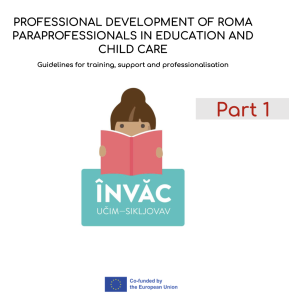
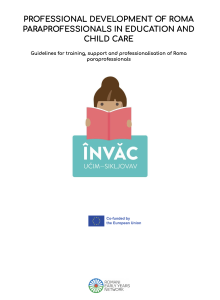
To address these challenges, the INVAC project (Initial and Continuous Training of Roma Paraprofessionals in Education and Child Care of Vulnerable and Disadvantaged Children) has developed two practical and timely resources now available via the REYN Knowledge Hub:
- INVAC Guidelines: A comprehensive framework for training, support, and professionalisation of Roma paraprofessionals.
- Self-Assessment Tool: A hands-on resource for individuals to assess and plan their professional development journey.
What do the resources offer?
This publication provides a strategic and practical roadmap for empowering Roma paraprofessionals across Europe. Based on needs assessments, field research in Croatia and Slovakia, and extensive consultation with practitioners, the guidelines offer:
- A competency framework spanning areas like pedagogy, intercultural mediation, socio-emotional development, collaboration, and ethical practice.
- A training framework adaptable to different national and local contexts, offering self-paced, tutored, and in-service learning opportunities.
- Practical recommendations for institutions (schools, training providers, policy makers) to support recruitment, continuous professional development (CPD), and professionalisation.
- Case studies from Croatia and Slovakia showcasing the roles, challenges, and aspirations of Roma paraprofessionals on the ground.
The guidelines serve as a vital tool not only for Roma paraprofessionals, but also for school leaders, teacher trainers, higher education institutions, and policymakers aiming to improve inclusion and equity in early childhood and education systems.
Download the INVAC Guidelines.
This interactive tool supports Roma paraprofessionals and other educational assistants in evaluating their competencies across the domains outlined in the guidelines. It enables them to:
- Reflect on their strengths and areas for growth.
- Plan personalized learning and CPD goals.
- Document training, experience, and self-paced learning in a portfolio format.
- Prepare for recognition of prior learning (RPL) or further qualifications.
Designed with usability in mind, the tool includes rating scales, reflection prompts, and planning sections. It encourages users to track progress over time and build a personal development record that can be used when applying for jobs, further training, or higher education.
Download the self assessment tool.
Who are these resources for?
- Roma paraprofessionals seeking to grow in their roles and build a career in education or care.
- ECEC and school leaders looking to strengthen inclusion and support staff development.
- CPD providers who want to design training tailored to Roma assistants’ realities.
- Policymakers aiming to formalize the role of Roma paraprofessionals and expand inclusive workforce strategies.
- Higher education institutions exploring recognition of prior learning and top-up programmes.
Why these resources matter now
The new EU Roma Strategic Framework (2020–2030) and national policies increasingly recognize the importance of a diverse, competent education workforce. Yet, many Roma assistants remain unrecognized, under-trained, and under-supported. The INVAC Guidelines and Self-Assessment Tool address these systemic gaps with a clear, competency-based, and action-oriented approach.
By publishing these resources, Open Academy Step by Step and Wide Open School, alongside REYN, continue to champion professionalisation and inclusion of Roma in education, advancing our shared mission of improving outcomes for Roma children and families.